The theft of Laura Blacklock's phone
The Woman in Cabin 10The theft of Laura Blacklock's phone is both a direct attempt to deprive her of communication and the clue that exposes a hidden route into her cabin aboard the Aurora Borealis. Finding the phone gone, Laura traces a wet shoeprint to the veranda door and tests the neighboring balcony, discovering that its apparent separation from the outside world offers little protection. The theft sharpens the danger of her isolation just as the ship nears Trondheim, where she hopes to reach the police.
Discovery and the missing phone
After checking the corridor for Ben Howard, whose pounding and shouting had stopped, Laura searches her evening bag for her phone. The bag is small and light; she turns it upside down, although she already knows the phone cannot be concealed there. It is not on the bed or in the bathroom, either. Nor does she think she left it at dinner: she remembers feeling it inside the bag during her argument with Ben, and would have noticed its weight missing when she put the bag down.
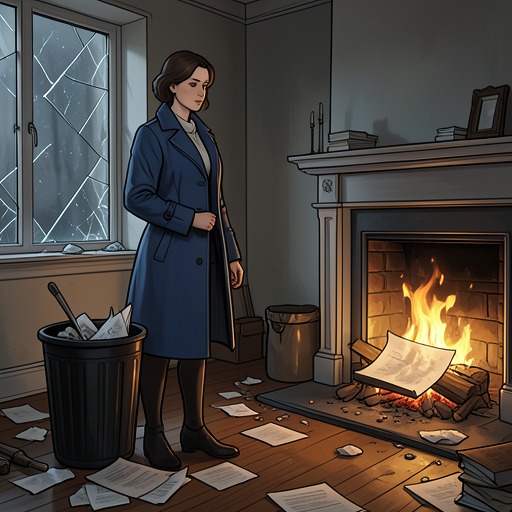
The sequence makes the absence feel less like ordinary forgetfulness than the result of deliberate access. Laura searches more thoroughly, throwing the duvet onto the floor and moving the bed. In doing so, she notices a wet footprint on the white carpet, close to the veranda door. At first she considers whether it could be hers, from getting out of the bath, but recalls drying her feet and not walking near the window. Touching the damp print, she can make out the heel of a shoe. The mark gives her a physical sign of another person's presence where she had assumed her cabin was secure.
The balcony route
Laura steps onto the balcony and looks across to the empty veranda beside hers. The high, sheer glass privacy screen is not an absolute barrier: someone bold enough, able to manage heights and willing to risk falling into the sea, could climb over it. She tests the sliding door from outside, carefully closing it and then pulling it open again. It moves smoothly. Inside, she checks the lock and sees that it cannot prevent someone from entering from the veranda.
The design has a practical explanation. A person using the veranda should be able to get back indoors rather than become trapped in bad weather or be unable to raise an alarm; a child could also shut a parent out. But that safety feature creates a vulnerability. The cabin door's locks, bolts, and do-not-disturb signs cannot secure a room if an intruder can reach its balcony from the adjoining empty space and pull the door open. Laura recognizes that the sea-facing veranda, which seemed to rule out outside access, instead gives a determined intruder a way around the cabin entrance. She dresses in jeans, boots, and her favorite hoodie, checks the cabin-door lock, and waits on the sofa with a cushion held against her chest.
Timing and threatened contact
Laura connects the theft to the approaching arrival at Trondheim. With the ship's internet down, she cannot call ashore without going through Camilla Lidman. That restriction has made her dependent on the ship's communications at the very moment she wants to report what she witnessed. Once the Aurora Borealis draws nearer to land, however, the person responsible would have reason to fear that she could get help. Laura therefore sees the timing of the theft as meaningful: taking the phone while she was in the bath was a daring act, but the need to stop her contacting people ashore could explain why it happened then.
The phone's disappearance thus changes the practical stakes of her journey. Trondheim is not merely the next port; it is the anticipated point at which Laura might reach the police and Judah Lewis. With her usual means of communication gone and the onboard connection unavailable, she concentrates on getting through the night until dawn. Her suspicion that the theft is connected to the account she has been trying to report is strong, but the evidence here does not identify the intruder. She remembers that Ben Howard knew about photographs on Cole Lederer's camera before she did, and he is the person she had thought she could trust, yet she pushes that suspicion aside rather than treating it as proof that he stole the phone.
A breach amid disbelief
The theft occurs against a wider struggle over whether Laura's account will be taken seriously. Johann Nilsson asks how much she drank the previous night; when he later challenges her story, he points to her medication, lack of sleep, drinking, and the absence of evidence. Laura insists that these circumstances do not make what she saw unreal. Richard Bullmer hears her account and says he will discuss possible next steps with Johann Nilsson and Captain Larsen, while warning that whether Norwegian police can act may depend on where the incident took place. Laura also tries to persuade Karla to share anything she may know, offering to protect her anonymity when she says she plans to speak to the police in Trondheim.
In that setting, the missing phone is more than a lost possession: it is a means of limiting Laura's ability to act on a report already being treated with doubt. The wet footprint and openable veranda give her a tangible basis for recognizing that her room has been entered, even as they fail to reveal who entered it. The theft converts an invisible threat into a specific vulnerability in the ship's design and leaves Laura with an urgent calculation: maintain enough safety to reach land, then find a way to be heard.